
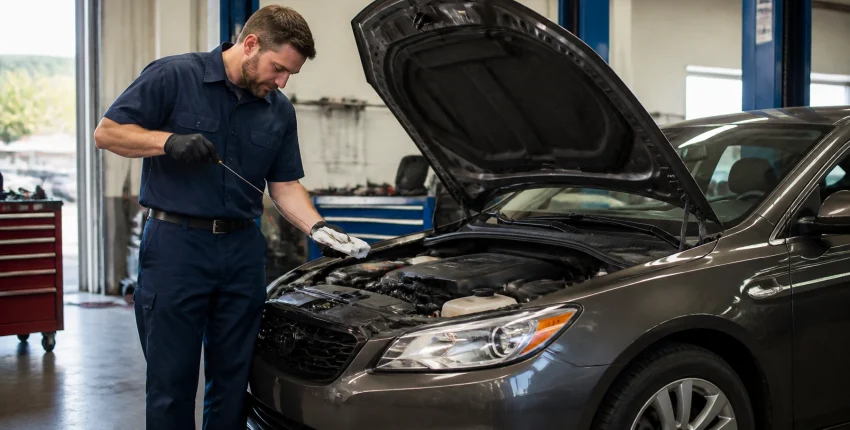
If you still plan every oil change around the old 3,000-mile rule, you may be changing your oil more often than necessary: or, depending on your driving habits and vehicle, not often enough.
Modern engines, improved oil formulations, and oil-life monitoring systems have changed the math. Many newer vehicles can go 5,000, 7,500, or even 10,000 miles between oil changes under normal driving conditions. But “normal” does not describe every trip around Moses Lake.
Dusty farm roads, hot summer temperatures, short errands, and stop-and-go traffic can all place extra stress on your engine oil. If you are deciding how often to schedule an oil change in Moses Lake, WA, the best answer starts with your owner’s manual: and then considers how and where you drive.
The 3,000-Mile Rule Is Outdated: but Not Completely Irrelevant
The 3,000-mile recommendation became popular when conventional motor oil and older engine designs were more common. Those vehicles often needed more frequent service because oil degraded faster and engines operated with less precise fuel and temperature controls.
Today, many vehicles are designed for longer intervals. Full synthetic oil generally resists heat and breakdown better than conventional oil, and modern engines are built with tighter tolerances. Some vehicles also use an oil-life monitor that estimates when service is needed based on factors such as engine temperature, trip length, mileage, and driving conditions.
That does not mean every vehicle should go 10,000 miles between changes. The correct interval depends on:
- Your vehicle’s year, make, model, and engine
- The oil specification listed in the owner’s manual
- Whether you use conventional, synthetic blend, or full synthetic oil
- The age and condition of the engine
- Your driving environment and habits
- The vehicle’s normal and severe-service schedules
The old rule is not a universal requirement anymore. However, it is also not wise to ignore your manufacturer’s schedule simply because a newer oil is being used.
What Is a Realistic Oil Change Interval?
For many modern vehicles using full synthetic oil, the normal-service interval may fall somewhere between 7,500 and 10,000 miles. Some vehicles specify a shorter or longer interval, so your owner’s manual always takes priority.
If your vehicle operates under severe conditions, the interval is usually shorter. A practical starting point for many Moses Lake drivers is approximately 5,000 miles or six months, whichever comes first. Your manual may call for service sooner, especially if you drive an older vehicle, use conventional oil, tow regularly, or spend a significant amount of time on dusty roads.
The Auto Care Association’s guidance on normal versus severe driving conditions also emphasizes that many everyday driving patterns qualify as severe service. That includes frequent short trips, extended idling, stop-and-go traffic, towing, and dusty or gravel-road driving.
The takeaway is simple: do not choose an interval based only on the oil label or an old rule of thumb. Compare your actual driving with the schedule in your manual.
Why Moses Lake Driving Conditions Can Shorten Oil Life
Your engine oil does more than reduce friction. It helps carry heat away from internal components, holds contaminants in suspension, and protects moving parts from wear. Certain local driving conditions can make that work more demanding.
Dusty farm and gravel roads
Dust itself should be filtered out by the engine air filter, but driving regularly on dirt, gravel, or farm roads creates a harsher environment for the entire vehicle. A restricted or damaged air filter can allow contaminants into the engine, while dust can also collect around service points and under the hood.
If you frequently travel dusty roads, inspect the air filter during routine maintenance. A clean filter helps protect the engine and supports proper airflow. Your oil-change service is a convenient time to check it.
Hot summer temperatures
Moses Lake summers can bring high temperatures, and heat is hard on fluids. Engine oil helps control internal heat, but prolonged exposure to high temperatures can gradually reduce the effectiveness of its additives.
Long commutes, heavily loaded vehicles, and extended highway driving during hot weather can increase the workload. Checking your oil level before a long trip is a small step that can help prevent a major problem.
Stop-and-go driving and idling
A smooth highway trip is generally easier on an engine than repeated short trips through town. Stop-and-go driving creates more starts, more acceleration, and more time operating at low speeds. Extended idling also adds engine hours without adding many miles to the odometer.
If your daily routine includes school drop-offs, errands, delivery stops, or long waits in traffic, your vehicle may reach its severe-service interval sooner than the mileage alone suggests.
Frequent short trips
Short trips can be especially tough on oil because the engine may not reach its full operating temperature. Moisture and fuel contaminants that accumulate during start-up may not have enough time to evaporate.
If most of your driving consists of trips of only a few miles, follow the severe-service guidance in your manual rather than assuming the normal interval applies.

Synthetic Oil Helps, but It Does Not Make Maintenance Optional
Full synthetic oil can offer strong protection in high temperatures and during demanding operation. It may also support longer manufacturer-approved service intervals. That is one reason the 3,000-mile rule does not automatically apply to every modern vehicle.
Still, synthetic oil cannot compensate for:
- Driving well past the recommended interval
- Running the engine with low oil
- Using the wrong viscosity or oil specification
- A clogged air filter
- An oil leak
- Excessive fuel dilution or internal engine wear
- Ignoring the oil-life monitor
Always use the oil type and specification listed in your owner’s manual. “Synthetic” describes the base oil, but the required viscosity and performance rating are also important.
How to Know When Your Vehicle Needs Service
Your dashboard oil-life monitor is a useful reminder, but it should be used alongside your maintenance records. Resetting the monitor without changing the oil does not extend the oil’s life.
Keep track of:
- The date and mileage of your last oil change
- The type and viscosity of oil used
- The next recommended service interval
- Any oil-level warnings or leaks
- Changes in engine noise, performance, or oil consumption
Check the oil level periodically, especially before road trips or after driving in extreme heat. Park on level ground, allow the engine to cool as recommended by the owner’s manual, and use the dipstick correctly.
Do not rely on oil color alone. Used oil often becomes darker while it is still doing its job, and clean-looking oil is not proof that it can safely go longer. Mileage, time, driving conditions, and the manufacturer’s schedule are more useful indicators.
If the red oil-pressure warning light comes on while driving, treat it seriously. Pull over safely and shut off the engine as soon as possible. Continuing to drive with low oil pressure can cause severe engine damage.
An Oil Change Is Also a Preventative Checkup
A routine oil change is more than draining old oil and adding new oil. It is an opportunity to look for small problems before they become expensive ones.
During service, a technician may identify signs of:
- Oil leaks
- Low fluid levels
- Worn belts or hoses
- A dirty engine air filter
- Battery or charging concerns
- Uneven tire wear
- Brake or suspension issues
That preventative approach can give you more confidence, particularly if you rely on your vehicle for family transportation, work, or longer trips outside Moses Lake. Addressing a minor leak or worn component early is usually easier than dealing with a breakdown later.
You can learn more about building a consistent maintenance routine in our guide to routine vehicle maintenance for a longer vehicle life.
The Bottom Line for Moses Lake Drivers
The 3,000-mile rule is no longer the right default for every car. Many modern vehicles and synthetic oils support longer intervals under normal conditions.
However, dusty roads, hot summers, frequent short trips, stop-and-go traffic, and extended idling can put your vehicle in the severe-service category. For many drivers, planning around 5,000 miles or six months is a sensible starting point: but your owner’s manual should always come first.
If you are due for an oil change in Moses Lake, WA, Best Buy Auto Service can help you follow the right schedule for your vehicle and driving habits. We provide straightforward maintenance, transparent communication, and fair pricing for cars, trucks, SUVs, and more. Contact the shop or schedule an appointment when it is time to protect your engine and keep your next drive worry-free.